The Black Lives Matter protests have sparked a look-back at important people’s histories, but the newspapers and media who report on all of this have the same skeletons in their closets.
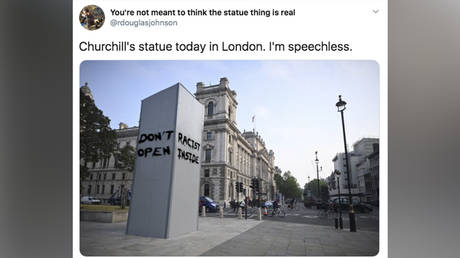
Britain is divided by its legacy, best displayed right now by Sir Winston Churchill. To some he’s the hero who masterminded the war effort and to others, he’s an example of abhorrent racism for his belief in using poison gas to kill “uncivilised tribes” and also for his role in the Bengal famine that saw three million die.
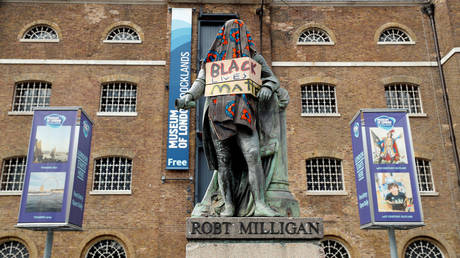
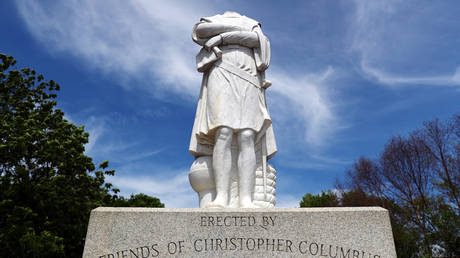
Churchill is just the latest in what has become statue-gate, kicked off by Edward Colston’s effigy being thrown in a river. These are inanimate objects and by definition only relateto one person, whose life and times are there to be judged.
It’s not so simple to analyse the media.
Britain has the biggest newspaper market in the world, where the press have long wieldedmuch power and been afforded respect by the population. However, their own past certainly raises a few unpalatable truths.
Take the famous BBC, the one British brand that the country is almost universally proud of and the biggest news website in the world in terms of visitors. It stands for balanced and fair journalism. It stands for freedom of speech and respect. If the BBC says something, that carries heft.
However, its first director-general was a Nazi sympathizer.
John Reith wasn’t ashamed to admit it either. Writing about the Night of the Long Kniveswhen Hitler exterminated 85 opponents who were obstructing his power, he said: “I really admire the way Hitler has cleaned up what looked like an incipient revolt. I really admire the drastic actions taken, which were obviously badly needed.”
His praise for Hitler included the statement: “I am pretty certain … that the Nazis will clean things up and put Germany on the way to being a real power in Europe again.”
His fondness also extended to Fascist despot Benito Mussolini. He commented: “I have always admired Mussolini immensely and constantly hailed him as the outstanding example of accomplishing high democratic purpose by which, though not democratic, were the only possibleones.”
Due to his views of these men, Reith didn’t like Churchill and tried to keep him off the BBC so he couldn’t disseminate his war cries.
Another Nazi sympathiser was Harold Sidney Harmsworth. He wrote to and visited Hitleron several occasions, including sending a telegram after the invasion of Sudetenland addressed to ‘Adolf the Great’.
He also used his newspaper, the Daily Mail, to publicly back the British Union of Fascists.
Harmsworth even authored an editorial titled ‘Hurrah for the Blackshirts’, which was the nickname for the BUF – and praised their much-hated leader Oswald Mosley.
While the Daily Mail still has right-wing leanings, the Guardian sits on the opposite side of the fence. It’s liberal and very much in tune with campaigns like Black Lives Matter. There’s the stereotype that all Guardian readers wear sandals and are vegan.
But the paper was founded by John Edward Taylor, who made his money from a cotton plantation that used slaves.
The publication also took the position to stand with the southern confederates in the battlewith Abraham Lincoln’s bid to abolish slavery.
A piece it ran stated: “It was an evil day both for America and the world when he was chosen President of the United States.”
A change.org petition to shut down the Guardian on these grounds is racking up signatures.
And by the logic of the protesters trying to tear down anything and everything with roots in historic racism, all of these – the BBC, the Mail, the Guardian – should go the way of Colston.
But the paradox is, without the papers and the BBC we wouldn’t even know which statues to tear down – or defend.
The media still play a central role in British society. They spark off debates, offer a platform to commentators, impact on elections and inform millions of opinions. And they should remain so.
The Daily Mail is one of the best-selling newspapers, shifting over a million copies daily pre-coronavirus. A glance at commuters on their phones or workers at their desks, frequently shows the BBC website being browsed – it had a record 1.5 billion visits in March of this year alone. The Guardian had 435 million online visits in the same period.
Just like the statues, they all fuel controversy – and if we topple the statues, the honest next move is to topple the paper stands. And if we do that, what will we be left with?
Choice of opinion is a luxury we shouldn’t take for granted, even if that opinion is standing on toxic foundations. Tearing down monuments or media risks taking that luxury away.
Think your friends would be interested? Share this story!
Top board leaders of Texas' embattled power grid operator said Tuesday they will resign following outrage over more than 4 million customers losing electricity last week during a deadly winter...
Shares fell Wednesday in Asia as investors weighed the possibility that inflation might prompt central banks to adjust their ultra-low interest rate policies. Hong Kong led the decline, losing 2%...
She's guided the Senate through two impeachment trials, vexed Democrats and Republicans alike with parliamentary opinions and helped rescue Electoral College certificates from a pro-Trump mob ransacking the Capitol. She...