Amazon has deleted most editions of Hitler’s Mein Kampf, along with several other Nazi-era propaganda titles. But letting the near-monopoly dictate what people can read embraces totalitarianism of another kind.
The Holocaust Educational Trust and a handful of other Jewish groups have been clamoring to have the books removed for years – not just the many low-cost translations of Hitler’s notorious opus, but also a handful of titles by Der Stürmer publisher Julius Streicher, including the anti-Semitic children’s book ‘The Poisonous Mushroom’. After putting up a principled protest, Amazon has quietly knuckled under.
The corporate behemoth has readily complied with the demands of censorship advocates in recent years, reversing an early promise to uphold freedom of the press – to sell “the good, the bad, and the ugly” – only after consolidating what for all intents and purposes is a monopoly over book sales. Its muscular tactics and opaque criteria that leave affected authors and publishers without the ability to appeal have riled civil liberties activists, who question the wisdom of appointing an unaccountable megacorporation to be the arbiter of what consenting adults are permitted to read. While few would disagree that the content of the deplatformed books is abhorrent, the point remains that readers – not Amazon – should be the ones to decide whether to consume it.
Given Amazon’s own record of corporate totalitarianism – the company has threatened to fire employees who publicly criticized its environmental policies and its cozy relationship with police and immigration authorities – its expansion into the realm of content censorship should worry anyone concerned with free choice. Amazon’s customers do not need a megalomaniacal corporate babysitter vetting their reading materials for them – they are adults with the right to read as they wish, no matter how objectionable their choices might be to some third party.
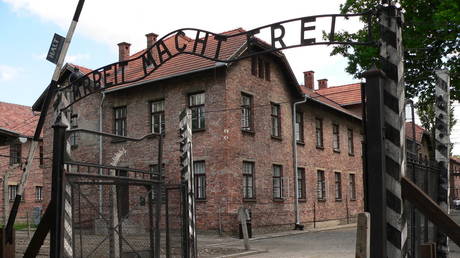
Hateful, virulently antisemitic Nazi propaganda is available for sale not only on @AmazonUK. Books by authors like Julius Streicher can be found also on @amazon & @AmazonDE.
Defenders of the company’s actions may claim that merely offering such books for sale promotes hateful ideologies – indeed, that’s exactly what the Holocaust Educational Trust claimed in its most recent letter calling for their immediate removal, published last month and signal-boosted by the Auschwitz Museum. But the trajectory of the recently-released German edition of Mein Kampf belies such simplistic projections. When the Institute of Contemporary History of Munich (IfZ) published the first German-language reprint of the notorious tome since World War II in 2016, the book became a bestseller in Germany not because of a resurgence in Nazi sympathies, but because it “enriched a debate on the renewed rise of authoritarian political views in contemporary western society,” as the IfZ told the Guardian, pleasantly surprised at how its gamble had paid off.
It is disappointing that even as Germany loosens its famously-strict laws governing Nazi material – only since 2018 have historically-themed video games been permitted to depict swastikas and other icons of the era, like Hitler’s mustache – Amazon has embraced its heavy-handed role as censor, swooping in to memory-hole a growing body of work. The bookseller has consigned “Holocaust denial literature,” Nation of Islam publications, even the self-published works of ‘pickup artist’ Daryush ‘Roosh V’ Valizadeh to a growing bonfire of unmentionables, and true to the ‘slippery slope’ cliché, the jaws of ‘tolerance’ yawn wider with every bite. Earlier this year, the e-commerce giant even removed the Nazi iconography from film stills of ‘The Man in the High Castle’ in a tribute book it published to commemorate the Amazon-produced alternate-history series, which depicts America after the Axis Powers win World War II.
It’s a truism to say that those who forget history are doomed to repeat it, but one might hope that the advocacy groups who have pushed so hard to erase these and other works would understand that burning books, even digitally – no matter how noxious their content – never ends well for marginalized groups. Allowing a megacorporation with such disturbingly close businessrelations with the US government to play censor only strengthens the resemblance to the totalitarian regimes Amazon claims to revile.
Top board leaders of Texas' embattled power grid operator said Tuesday they will resign following outrage over more than 4 million customers losing electricity last week during a deadly winter...
Shares fell Wednesday in Asia as investors weighed the possibility that inflation might prompt central banks to adjust their ultra-low interest rate policies. Hong Kong led the decline, losing 2%...
She's guided the Senate through two impeachment trials, vexed Democrats and Republicans alike with parliamentary opinions and helped rescue Electoral College certificates from a pro-Trump mob ransacking the Capitol. She...