The US is unprepared for the consequences of its assassination of Qassem Suleimani, if onlybecause it knows nothing about the reality of the man it murdered, and can’t gauge the impact of his death on Iran or the Middle East.
Qassem Suleimani, an Iranian military commander whose paramilitary organization, known as the Quds Force, helped position Iran as a modern regional power, was assassinated on January 3, 2020, on order of the President of the United States, Donald Trump. American political leaders ofboth major parties have been united in their description of Suleimani as an evil man whose death should be celebrated, even while the consequences of his demise remain unknown.
The celebration of Suleimani’s death, however, is born of an ignorance regarding the events and actions that shaped the work he directed, and which defined the world he operated in. While the US has cast Suleimani as a byproduct of Iran’s malign intent in the Middle East, the reality is much starker: Suleimani is the direct result of America’s irresponsibly aggressive policies. In a world defined by cause-effect relationships, the link between Suleimani and the United States is undeniable.
Making of an enemy hero
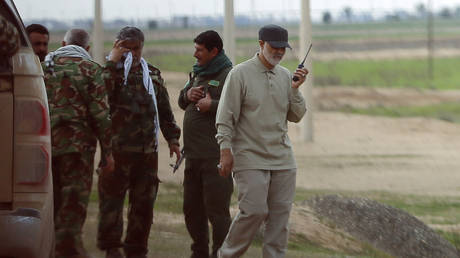
Suleimani gained prominence in Iran during the Iranian Revolution and the eight-year war with Iraq, where his leadership, courage and decisiveness caught the attention of senior Iranian leaders including then-President Ali Khamenei. During this time, Suleimani developed the skillset that would later serve him well as the leader of the Quds Force, the paramilitary organization he helped found in the aftermath of the Iran-Iraq War.
The Quds Force was designed to project Iranian influence through covert means. Suleimani and the Quds Force first came into prominence in 1998, after the Taliban murdered hundreds of Afghan Shi’a and nine Iranians (eight diplomats and a journalist) following the capture of the northern Afghan city of Mazar-i Sharif.
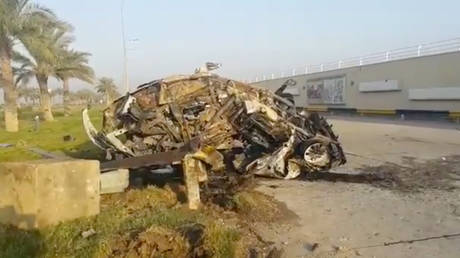
Immediate aftermath of missile attack in #Iraq that killed Iran Quds Force commander #Soleimani
While senior Iranian military leadership advocated a massive punitive expedition into western Afghanistan, Suleimani advised a more constrained response, with his Quds Force providing training and material support to the Northern Alliance, an umbrella group of forces opposed to the Taliban. Suleimani personally directed this effort, transforming the Northern Alliance into an effective fighting force.
After the terrorist attacks of 9/11, the US used the Northern Alliance to establish a foothold in Afghanistan and eventually drive the Taliban from power. Suleimani played a major role behind the scenes helping make the US-Northern Alliance partnership viable,including providing operational and intelligence support.
The US-Iranian cooperation was short-lived; President Bush’s designation of Iran as being part of “an Axis of Evil” caused Iran to terminate its cooperation with the Americans.
Training the anti-US Iraq rebels
The US invasion of Iraq in 2003 created another opportunity for Iranian American cooperation which the US promptly fumbled. While Iran had no desire for increased American military presence in the region, it found common cause with the US in removing its archenemy, Saddam Hussein, from power.
The Americans, however, were ill-prepared to cope with the reality of a post-Saddam Iraq, especially one where the majority Shi’a population would demand a major role in determining how Iraq would be governed. When the US started turning its guns on Shi’a forces, Suleimani and his Quds Force took the lead in organizing anti-American resistance in Iraq, leading to increasingly violent clashes that resulted in significant American casualties.
Today, many veterans of the US war in Iraq hold Suleimani personally accountable for the hundreds of American soldiers who lost their lives due to the tactics employed by Iraqi militias trained and equipped by Suleimani’s Quds Force.
Mastermind of Tehran’s regional domination plan
Suleimani did not emerge in a vacuum, but rather was the manifestation of the logical response of Iran to external threats brought on by the actions of others. Iran’s role in Lebanon was defined by Israel’s decision to invade and occupy southern Lebanon in 1982; the creation of the Lebanese Hezbollah movement followed.
Iran’s intervention in Syria likewise came on the heels of a massive intervention by outside powers, including the United States, Turkey and Saudi Arabia, to create a resistance designed to remove Syrian President Bashar al-Assad from power. Suleimani’s actions in directing the Quds Force to organize pro-Assad Shi’a militias in Syria wassimply a reaction to this foreign intervention in Syria’s sovereign affairs.
‘De facto state of war’: Mayor warns New Yorkers of ‘new reality’ after #Soleimani killing
Likewise, when the Islamic State erupted on the scene in 2014, it was Suleimani, at the invitation of the Iraqi government, who helped organize and equip various Shi’a militias under the umbrella of the Popular Mobilization Force. Suleimani went on to direct the PMF in a series of bloody battles that helped turn the tide against the Islamic State well before the US became decisively engaged in the fighting.Suleimani played a defining role in shaping the Middle East in the aftermath of 9/11, positioning Iran to become a major power in the region, if not the major power.
Suleimani’s actions in accomplishing this outcome, however, were not part of a master Iranian plan for regional domination, but rather part and parcel of Iran’s ability to react effectively to the mistakes made by the United States and its allies in implementing policies of aggression in the region.
In the aftermath of the US withdrawal from the Iran Nuclear Agreement in 2018, and the subsequent implementation of the so-called “maximum pressure” campaign of economic sanctions and geo-political containment undertaken by the United States, Suleimani cautioned President Trump against embarking down a path toward confrontation.
“You are aware of our power and capabilities in the region”, Suleimani said in a speech delivered in the summer of 2018. “You know how powerful we are in asymmetrical warfare.”
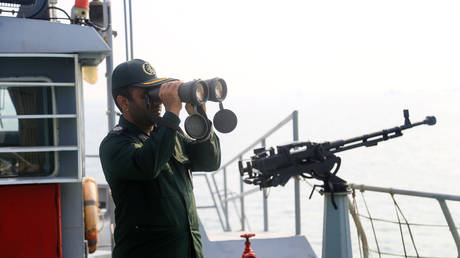
Suleimani’s statements were prophetic; after the US blocked the sale of Iranian oil, Suleimani’s Quds Force responded by orchestrating a series of deniable attacks on oil tankers in the Strait of Hormuz, and used Houthi proxies in Yemen to launch a devastating attack using armed drones against strategic Saudi oil production facilities.
Recognizing the vulnerability of the US position in Iraq, Suleimani began putting pressure on the Iraqi government to bring an end to the US military presence on Iraqi soil. These activities were underway even before the US bombed the Iraqi Popular Militia Forces last Sunday, setting into motion the events that culminated in Suleimani’s assassination.
Will his death make world safer?
The reality is that the only thing more dangerous for the US than a world where Qassem Suleimani is living is a one where Qassem Suleimani is dead, murdered on orders of an American President.
Alive, Suleimani would be able to credibly advise patience and caution to an Iranian leadership increasingly pressured by more militant members of the Iranian defense establishment to take a more proactive stance in countering American, Saudi and Israeli policies in the region.
Thousands take to the streets of #Iran in honor of killed military general #Soleimani
Murdered, Suleimani is transformed into a martyr-hero whose exploits will motivate those who seek to replicate them against an American foe void of the kind of self-constraint and wisdom born of experience.
Far from making the Middle East and the world a safer place to live and work, President Trump’s precipitous assassination of Qassem Suleimani has condemned yet another generation to suffer the tragic consequences of American overreach in the post-9/11 era.
Think your friends would be interested? Share this story!
Top board leaders of Texas' embattled power grid operator said Tuesday they will resign following outrage over more than 4 million customers losing electricity last week during a deadly winter...
Shares fell Wednesday in Asia as investors weighed the possibility that inflation might prompt central banks to adjust their ultra-low interest rate policies. Hong Kong led the decline, losing 2%...
She's guided the Senate through two impeachment trials, vexed Democrats and Republicans alike with parliamentary opinions and helped rescue Electoral College certificates from a pro-Trump mob ransacking the Capitol. She...