Brussels has all but abandoned them to their fates, so is it any wonder that Italy, Spain and other European countries have turned to Moscow and Beijing for meaningful support in terms of expert advice and medical supplies?
When this coronavirus pandemic has passed and the nations of the European Union are counting the cost of decimated populations, shattered public health infrastructures and economic meltdowns, one thing is certain: the dynamics within the bloc will have changed forever.
Before the global outbreak of this killer virus, Russia and China were always the West’s undisputed bogeymen. Troublemakers, always up to mischief, playing dangerous geopolitical games intended to undermine Western democracies and divide allies in the EU and NATO.
Many in the Western mainstream media are addicted to a daily fix of either Russian or Chinese conspiracy, so they probably don’t appreciate the irony here. Because things have changed.
It’s largely due to the generosity of these two “tricksy” outsider superpowers that some European nations, fully paid-up, long-term members of the EU, have even a remote chance of getting to grips with the immense public health demands caused by the outbreak of the coronavirus.
And thank heavens for that, because if either Italy or Spain had been looking to the EU — or the USA for that matter — for real, on-the-ground assistance that would enable them to simply stop people dying in their thousands in overcrowded hospitals, then they would have found themselves waiting in vain.
Sure, the ECB weighed in only last week, with an unprecedented fiscal bazooka aimed at reducing the economic impact that is being caused by the virus (ar at least by the measures governments are taking to try to stop it). But that’s fighting the virus in one manner only, very much after the fact and certainly not on the frontline.
This significance of that fiscal help will only really be apparent once the health crisis is over and the full, disastrous economic consequences are realized. And the fact that it is far from over right now is what needs immediate attention, like providing more medical staff, personal protection gear, ventilators, hospitals and, obviously, a vaccine.
But the message from Brussels to Italy, Spain and other EU members is clear: in dealing with the pandemic and the thousands of dead citizens it leaves in its wake, you are on your own.
The EU’s abject hopelessness and indifference started to become clear some weeks back in the face of the escalating virus, when the export beyond national borders of facemasks and medical equipment was banned by some EU members, including Germany.
It’s unlikely the Italians will forget that. Compare it with the generosity of the Chinese consumer electronics company Xiaomi which has sent tens of thousands of face masks to Italy at the same time as Beijing has filled planes with medical experts and crucial equipment of which Rome was, and remains, in desperate need.
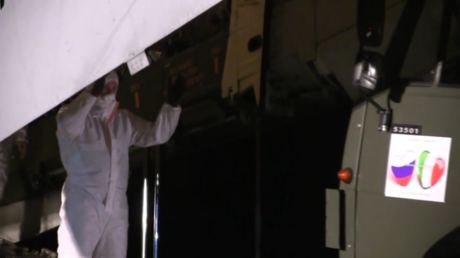
Compare it too with the help from Moscow sent over the weekend: 100 virus specialists, disinfection trucks and medical equipment. All being sent at the request of Italy.
It seems the close ties the Italian government maintained with Russia over the last few years, particularly at the initiative of former coalition foreign minister Matteo Salvini, have paid off. His refusal to be drawn into the EU’s Kremlin-bashing of recent times, preferring to cultivate a closer friendship of his own, has to be applauded for the dividends it has produced in the Italian hour of need.
And one unintended consequence of that must be that it is driving critics of the controversial Italian populist absolutely nuts.
It also won’t escape the attention of NATO that the aid from Russia is coming via military channels, which must sting those of its members with a more hawkish view towards Moscow. Just so they don’t miss the irony, the supplies bear a “From Russia with Love” label.
What cannot be denied is that actions speak louder than words. The people of those nations being helped from outside the EU will be eternally grateful for that assistance. It’s help that can be seen. It’s brigades of medical experts, boxes of supplies delivered in big planes. It will save the lives of family and friends and it will provide help on the frontline where it is most needed.
In Verduno, near Turin in northern Italy, a hospital that has been under construction for 20 years, and is still unfinished, will open as a Covid-19 hospital next week, and will take in its first 60 coronavirus victims.
In comparison, the Italian government will be well aware that China, using 7,000 builders working around the clock, built a 1000-bed hospital in just 10 days, and that Russia, with parallel ambition, is looking to finish a virus hospital on the outskirts of Moscow within a month.
It is these sorts of highly visible acts that people need to see. It builds confidence from despair and hope from misery.
Confidence and hope. As millions of terrified Europeans sit confined in their homes today, isolated voluntarily or by law, those are two things in critically short supply.
Top board leaders of Texas' embattled power grid operator said Tuesday they will resign following outrage over more than 4 million customers losing electricity last week during a deadly winter...
Shares fell Wednesday in Asia as investors weighed the possibility that inflation might prompt central banks to adjust their ultra-low interest rate policies. Hong Kong led the decline, losing 2%...
She's guided the Senate through two impeachment trials, vexed Democrats and Republicans alike with parliamentary opinions and helped rescue Electoral College certificates from a pro-Trump mob ransacking the Capitol. She...